Call first
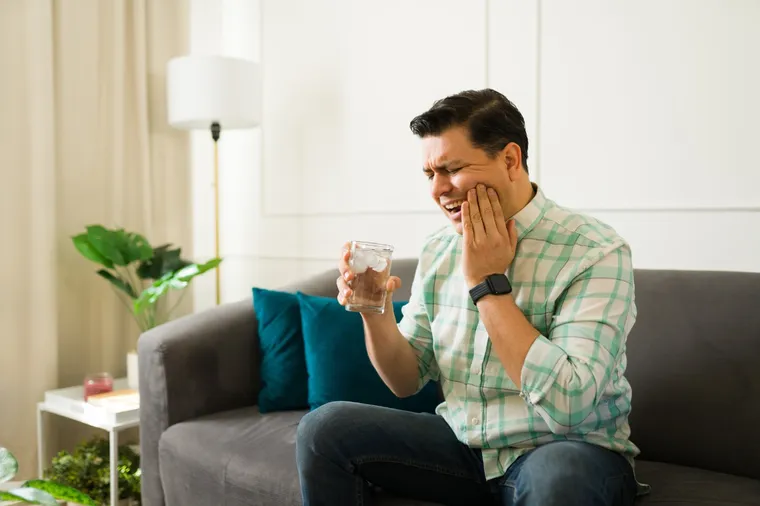
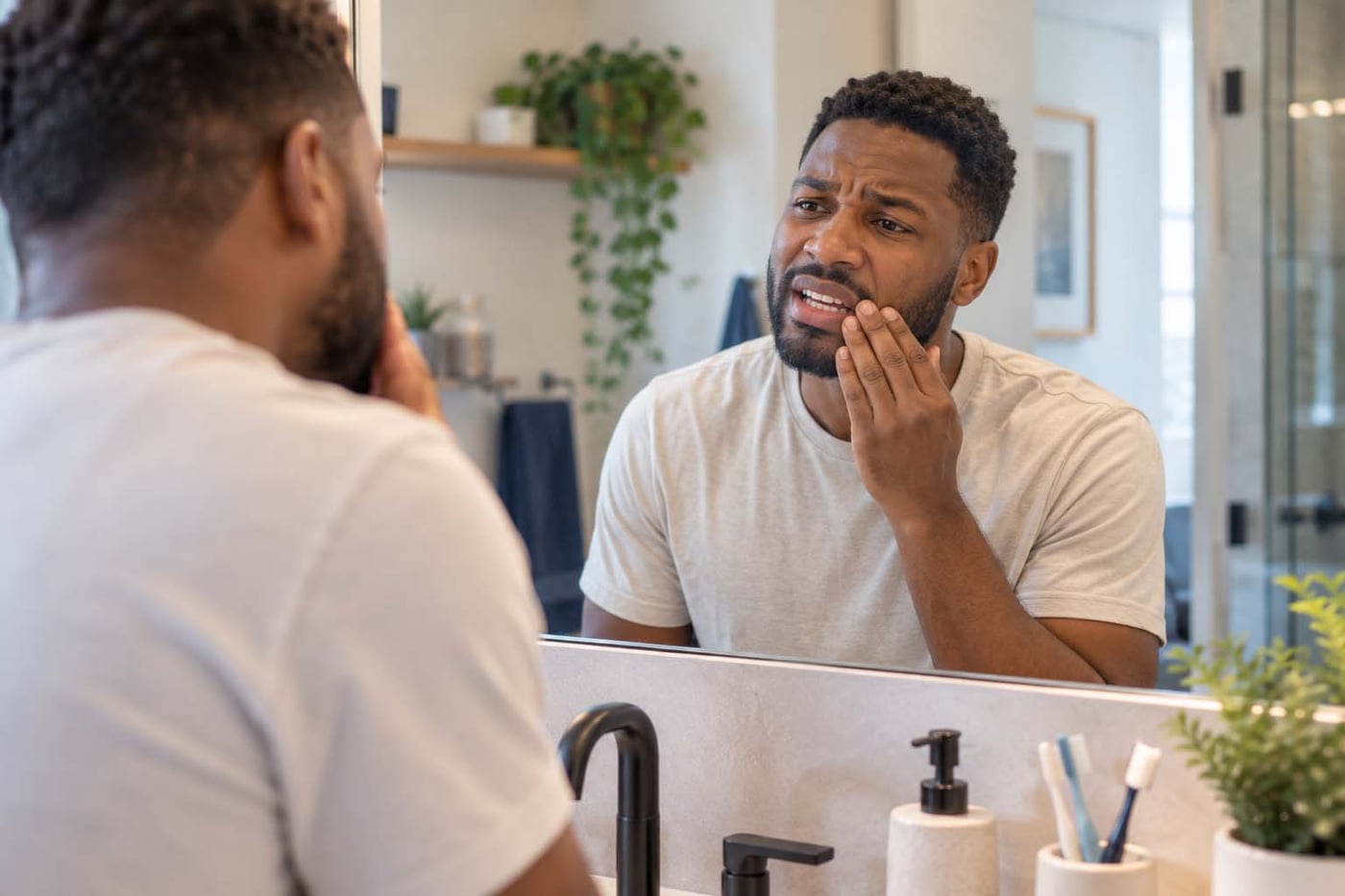
Many people wait until the next morning for fear of being a bother, or because they do not know whether their situation “counts” as an emergency. That is a poor reason to wait: on the phone, we can tell you in two minutes whether you need to come in right away, today, or in a few days.
At Centre dentaire Vadeboncoeur, every dental emergency request is called back the same day, during opening hours. The number is 819 770-9000.
To make the call useful, have these answers ready:
- What happened, and exactly when.
- Which tooth is affected, and whether it is loose.
- Whether there is bleeding, and whether it stops.
- Whether there is swelling, and whether it is increasing.
- The level of pain, and what triggers or relieves it.
- The medications you take, and your allergies.
If you have a fragment of tooth, a crown or a filling in hand, say so. It sometimes changes what we ask you to bring.
A tooth knocked out completely
This is the one situation where delay changes the outcome decisively. A permanent tooth put back within the first hour has a good chance of holding; after a few hours, the odds collapse.
What to do:
- Pick the tooth up by the crown, the white part you normally see in the mouth. Never touch the root: the cells covering it are what will allow the tooth to reattach.
- If it is dirty, rinse it briefly under a trickle of cold water or, better, in milk. A few seconds is enough. Do not scrub it, do not brush it, and do not use soap or disinfectant.
- Put it back in its socket if you feel able to. Push gently until it is level with the neighbouring teeth, then bite on a clean cloth or a gauze pad to hold it in place.
- If that is not possible, keep it moist. In a container of milk, preferably. Failing that: your own saliva, held in your cheek if you are an adult and there is no risk of swallowing it. Never in tap water, and never dry in a tissue.
- Go to the clinic immediately. Call while someone drives you.
A special case: a baby tooth. Do not put it back. Reimplanting a primary tooth risks damaging the permanent tooth forming beneath it. Clean gently, have the child bite on a gauze pad to stop the bleeding, and call anyway: we need to check that no fragment has been left behind and that the permanent tooth has not been affected.
A broken, cracked or chipped tooth
Rinse your mouth with lukewarm water. If the lip or cheek has been cut, apply a cold compress to the outside of the face to limit swelling.
Pick up the pieces if you find them, and keep them in milk or water. A fragment can sometimes be bonded back on, especially on a front tooth.
What to watch for in the hours that follow: if the broken area is sensitive to cold, to air or to touch, the dentin or the nerve is exposed. Avoid chewing on that side and call the clinic the same day. If a red or pink spot is visible in the middle of the break, the nerve is uncovered: that is an emergency, and delay works against the tooth.
A crack with no missing piece is deceptive. The tooth looks intact but hurts when you release your bite rather than when you bite down. It needs an examination: left untreated, a crack progresses and often ends up splitting the tooth in two. Restorative dentistry offers several solutions depending on the extent of the damage.
A crown or filling that has come loose
This one often happens at the worst moment: in a mouthful of caramel, on a Friday evening.
Pick up the crown and keep it. In the vast majority of cases, it can be recemented as is, which costs far less than making a new one. Rinse it, dry it, and put it in a small closed container, not in a pocket or a tissue, where it ends up in the bin.
The tooth underneath is often very sensitive, because it has been prepared and the dentin is bare. In the meantime:
- Chew on the other side.
- Avoid anything very hot, very cold or sweet.
- You can cover the tooth with temporary dental cement, sold at the pharmacy. Petroleum jelly or dental wax also do the job in the short term.
- Never reattach a crown with fast-setting glue. It is toxic to the nerve, makes removal impossible without destroying the crown, and turns a simple repair into full treatment.
If it is a filling that has come out, the principle is the same: protect the cavity, do not chew on it, and book an appointment promptly. An open cavity fills with debris and decays again quickly.
Severe pain or swelling
Pain that keeps you from sleeping, that does not respond to painkillers or that comes with swelling generally indicates an infection. It will not resolve on its own, and delay makes things worse.
While you wait for your appointment:
- Rinse with warm salt water, about half a teaspoon of salt in a glass of water, a few times a day.
- Apply cold to the outside of the cheek, never heat. Heat dilates the blood vessels and can spread the infection.
- Keep your head elevated when you sleep. Tooth pain is often worse lying down.
- Take an over-the-counter painkiller according to the dosage on the package, respecting your usual contraindications. If in doubt, your pharmacist can advise you.
- Never lance a lump or an abscess yourself.
An abscess shows up as throbbing pain, swelling of the gum or the face, a persistent bad taste, and sometimes fever. Call the clinic the same day.
Three other common situations
Something stuck between two teeth. Try dental floss, gently, sliding it downward rather than forcing it. If it does not come out, stop. A toothpick, a pin or a butter knife ends up injuring the gum or pushing the debris further in.
A poking orthodontic wire or bracket. Bend the end of the wire back with the handle of a spoon, or cover it with orthodontic wax. If that is not possible, a small piece of gauze or cotton will do temporarily. Never cut the wire yourself: the fragment could be swallowed or inhaled. Call your orthodontist.
A cut to the lip, the cheek or the tongue. Clean with water, apply a clean compress with firm, constant pressure, and add cold to the outside. These tissues bleed heavily and it often looks more alarming than the injury warrants. If the bleeding does not stop after 15 minutes of continuous pressure, go to the emergency room.
The mistakes that make things worse
Some home remedies, handed down from one generation to the next, cause more damage than the original problem.
Crushed aspirin on the gum. This is probably the most widespread, and one of the worst. Aspirin is an acid: placed directly on the tissues, it causes a painful chemical burn that takes days to heal. And it does not relieve the tooth, because the painkiller works through the bloodstream, not through contact. Swallow it instead.
Heat on swelling. A warm compress, a hot water bottle, a scalding mouthwash: all of it speeds up the spread of an infection. Cold, always.
Strong glue on a crown. Covered above, but it bears repeating: it turns a twenty-minute recementation into a full replacement.
Alcohol as a mouthwash. Whisky on a sore tooth is a classic that does not work and irritates tissues that are already inflamed.
Waiting for it to pass. Tooth pain that goes away on its own after several days is not always good news. It sometimes means the nerve has died, while the infection carries on silently.
When to go to the hospital emergency room
Most dental emergencies are handled at the clinic. A few situations belong at the hospital, however, because they involve more than the tooth.
Go to the emergency room, or call 911, if:
- The swelling reaches the eye, the neck or the floor of the mouth.
- You have difficulty breathing or swallowing.
- You can no longer open your mouth normally.
- You have a fever with chills in addition to tooth pain.
- The bleeding does not stop after 15 minutes of continuous pressure.
- The injury comes with a loss of consciousness, vomiting or confusion: there may be a concussion or a jaw fracture.
In all of these cases, an infection or an injury goes beyond the dental scope and requires immediate medical care.
In short
Keep the essentials: a tooth knocked out is put back or kept in milk, and you leave right away. A loose crown is kept and never reattached yourself. Swelling is treated with cold, never heat. And aspirin is swallowed, not placed on the gum.
For everything else, the phone is your best tool. A two-minute call will save you from waiting needlessly, or from waiting when you should not have.
The team at Centre dentaire Vadeboncoeur, in the Hull sector of Gatineau, calls back every emergency request the same day, during opening hours.